|
|
|
 |
|
|||
|
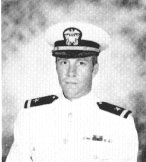
John |
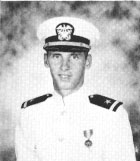
Ken |
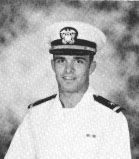
Joe |
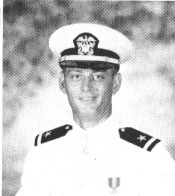
Tom |
John |
Byron |
Dan |
VT-23
NAS Kingsville, Texas
October 1972 - May 1973
After arriving at NAS Kingsville I waited about one week for other classmates to arrive. Once all had reported, we commenced ground school training and about two weeks later our initial flight training. Our class consisted of seven students: John Cullinan, Ken Eisenhart, Joe Krygiel, Tom Mayer, John Merritt, Byron Mortenson and me.
|
|
|
|
|
|||
|
John |
Ken |
Joe |
Tom |
John |
Byron |
Dan |
A normal set of training flights included the following:
Initial flight training consisted of Basic Instrument flying techniques and landings and acrobatics. About half of the instrument training flights were actually in flight simulators. These simulators cost more than one million dollars back in 1970 and consisted of 2 PDP11/45 real-time computers and a T2 cockpit supported by a hydraulic motion system to make the student experience the motion of flight.
The T2C seen here if from VT-23, Training Squadron 23, based at NAS
Kingsville, Texas. Used for basic jet training this aircraft had two engines
generating about 3000 horse power per engine. Built in Columbus, Ohio,
it was named the Buckeye. With it's straight wing the T2 was very forgiving
of student and instructor mistakes. The T2 was the only jet aircraft where
spins were taught. The A4 had less well-behaved spin behavior and the Navy
did not permit intentional spins except at Test Pilot School at Pax. River
Maryland.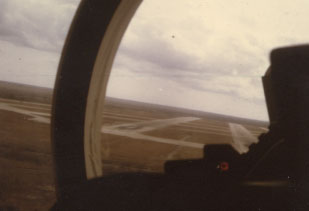
A cockpit photo from inside the T2 shows the twin runways at NAS Kingsville. The red circle on the instrument panel is known and the "angle-of-attack indexer light". The angle the airflow hit the aircraft wing was used for speed control of the aircraft for landings. The red circle is the '"on-speed" condition. Additional lights, either an upward or downward pointing cheveron indicated fast of slow speed conditions. This gauge and light indicator were far more accurate and responsive to speed changes than a normal airspeed indicator and one of the primary instruments used by pilots to land aboard aircraft carriers.
On the first flight in the T2 my instructor pointed out the angle-of-attack system, the mirror or "meat-ball" adjacent to the runway that all Navy pilots used to go aboard the carrier. He said that although it wasn't part of the training to use this equipment during the early phases of the training program, it was good to start taking them into account as soon as possible.
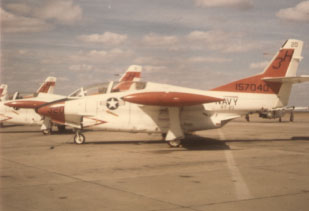 This picture of
the flight line as NAS Kingsville shows one of VT-23s aircraft. The red
tanks on the end of the wings held fuel as did the wing itself. This aircraft
with a full load of fuel was good for about 1000 miles in good weather.
From Kingsvill to Wright Patterson AFB was just a little beyond it's range,
especially in bad weather.
This picture of
the flight line as NAS Kingsville shows one of VT-23s aircraft. The red
tanks on the end of the wings held fuel as did the wing itself. This aircraft
with a full load of fuel was good for about 1000 miles in good weather.
From Kingsvill to Wright Patterson AFB was just a little beyond it's range,
especially in bad weather.
The T2 was unusual for the Navy, in that it had battery start capability. This allowed the T2 to fly into a number of airfields around the U.S. that other Navy aircraft couldn't. Although hard to see in this picture, the T2 came equiped with an arresting hook, painted with black and white bands. The hook is just noticeable below the vertical stabalizer.